Praxis Spring · Berlin-Tegel
Closing a tooth gap – finding the right replacement
Closing a tooth gap means more than replacing a missing tooth. At Praxis Spring in Berlin-Tegel, we assess which option suits your mouth, neighbouring teeth and preferences: a bridge, a titanium implant or removable replacement teeth.
Berliner Straße 97 · 13507 Berlin-Tegel
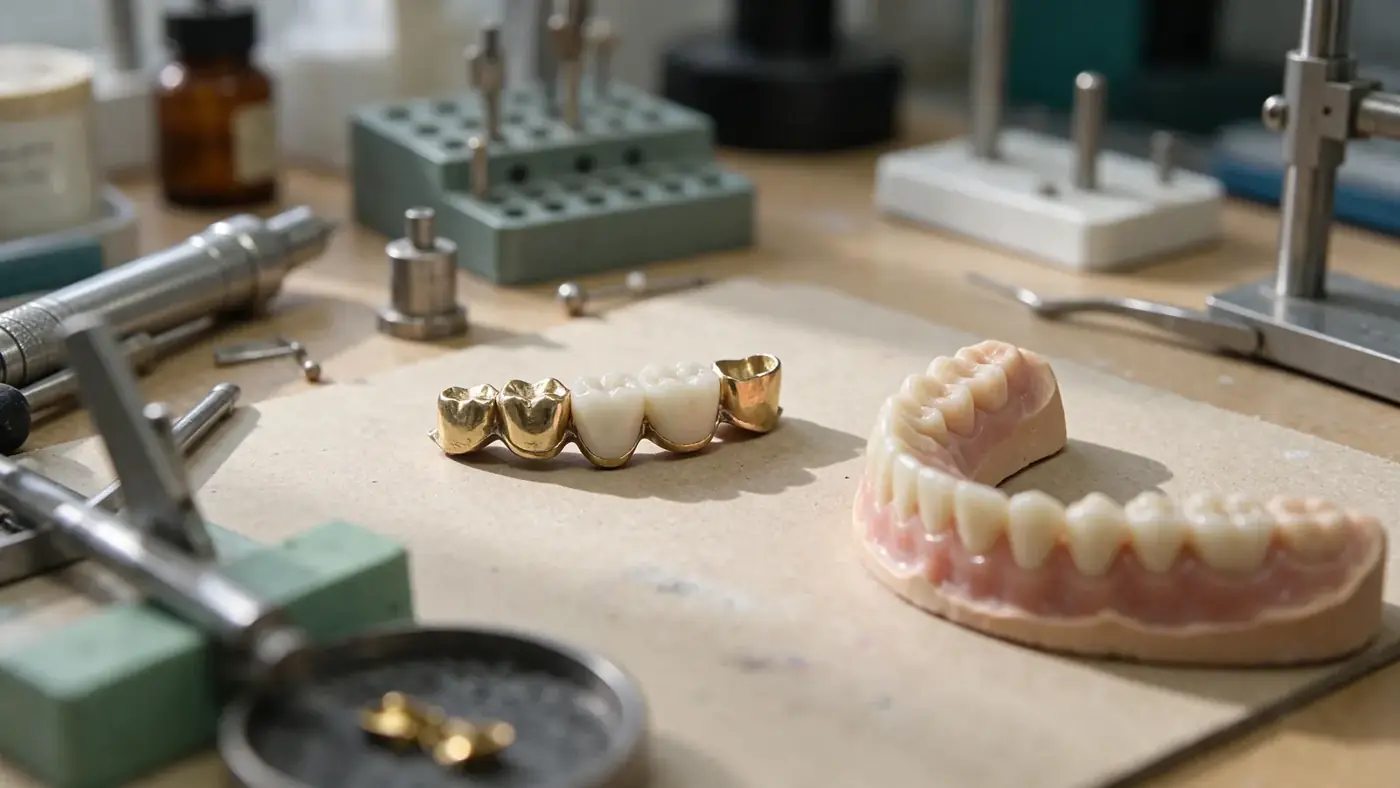
Closing a gap starts with understanding the cause
Gaps do not all have the same cause. A tooth may have been lost through decay, injury or disease of its supporting tissues. Small spaces between existing teeth are different from missing-tooth gaps; a conventional filling cannot replace a whole missing tooth.
The examination considers the position and size of the gap, chewing forces, gums, bone and adjacent teeth. X-rays may be needed depending on the question. These findings help determine whether and how the gap should be closed. A cosmetically bothersome gap is not automatically an emergency.
Source: [1] IQWiG: Kronen, Brücken, Implantate – Arten von Zahnersatz
A bridge: fixed replacement supported by neighbouring teeth
A conventional bridge spans the gap and is attached to sufficiently stable supporting teeth. These teeth usually need preparation. This may be viewed differently when they already have large fillings or need crowns than when they are intact.
A bridge is not automatically the best option just because it avoids implant surgery. The supporting teeth’s strength, access for cleaning and long-term prospects matter. Cleaning underneath the bridge is explained for your particular replacement.
Source: [1] IQWiG: Kronen, Brücken, Implantate – Arten von Zahnersatz
A titanium implant: replacing a tooth root
A titanium implant is anchored in the jawbone and can support a crown. It may close a gap without preparing healthy neighbouring teeth as bridge supports. Suitable bone conditions and controlled oral health are among the requirements.
Treatment involves surgery and an individually planned healing period. Immediate loading is not suitable in every case. We discuss possible risks and alternatives before you decide.
Source: [1] IQWiG: Kronen, Brücken, Implantate – Arten von Zahnersatz
Several gaps and removable replacement teeth
When several teeth are missing, a partial denture or combined approach may be appropriate. The decision does not depend on the number of missing teeth alone. Their distribution, the remaining teeth’s strength, everyday handling and access for cleaning also matter.
With suitable findings, telescopic crowns may stabilise dentures. Small spaces between intact teeth may call for other approaches depending on their cause. Consultation therefore distinguishes between an actually missing tooth and a bothersome space.
Source: [1] IQWiG: Kronen, Brücken, Implantate – Arten von Zahnersatz
Understanding costs before closing a gap
We always prepare a cost estimate before treatment for transparency. You receive a clear overview of the planned steps, materials and likely personal contribution. For replacement teeth, statutory-insurance patients require a treatment and cost plan coordinated with their insurer.
A flat price would not be reliable without an examination. Appropriate treatment depends on your findings, not an online offer. Bring existing records, a medication list and, where applicable, your preventive-care record to the consultation.
Source: [1] IQWiG: Kronen, Brücken, Implantate – Arten von Zahnersatz
Frequently asked questions
Common questions about consultation
Can a normal filling close a tooth gap?
Is an implant always better than a bridge?
How long does closing a gap take?
Related guide
Bridge or implant: which questions help you decide?
More detailed questions and practical guidance, not a duplicate service description.
Sources and update date
Website editorial team (AI-assisted) · Updated: 18 November 2026
Medical note
This information does not replace dental examination, diagnosis or personal treatment advice. The sources provide professional context; this page does not claim a personal clinical review by Bogdan Spring.
Discuss the next step calmly
This content offers general guidance. Appropriate assessment or treatment is decided at a personal appointment.