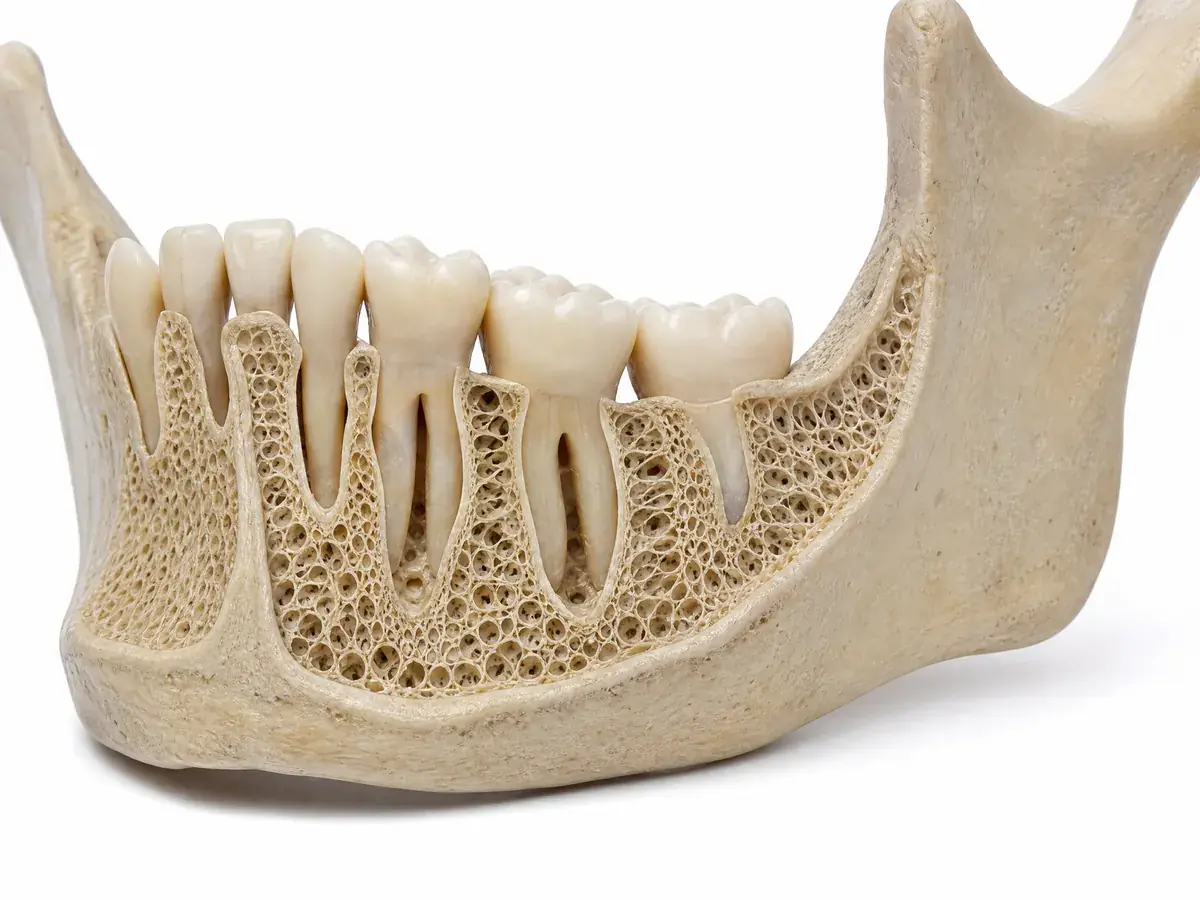
Bone Preservation (Socket Preservation) Berlin-Tegel – Optimal Preparation for Implants
When a tooth needs to be extracted, many patients initially think about the replacement – but few think about what happens underneath: the jawbone. Without the load from a tooth root, the bone begins to deteriorate within a few weeks. Bone preservation (Socket Preservation) addresses exactly this – and protects the foundation for your future dental restoration.
Book your appointment – free initial consultation
Why does the bone deteriorate after a tooth extraction?
The jawbone is living tissue that is constantly renewing and remodelling itself. This process is controlled by the mechanical stimuli transmitted through the tooth root into the bone during chewing. Without the tooth root, the stimulus is also absent – and the body resorbs the bone as no longer needed. Studies show that the jawbone can lose up to 50 percent of its volume in the first 12 months after extraction. This resorption affects both the width and height of the bone and can make future implants considerably more difficult or even impossible – without extensive bone grafting procedures.
How does Socket Preservation work?
Bone preservation is performed immediately following tooth extraction – in the same session, without an additional appointment. The extraction socket is carefully cleaned and then filled with a biocompatible bone grafting material. This material serves as a three-dimensional scaffold on which the body's own bone growth can take hold. A collagen membrane covers the material and protects it from soft tissue ingrowth. The wound is sutured and heals over the following weeks. The bone grafting material is gradually replaced by the body's own bone – the implant bed is maintained in its original shape and quality.
When is bone preservation particularly important?
We generally recommend bone preservation whenever an implant is planned after tooth extraction. The procedure is particularly important in the front tooth area, where the bone profile is crucial not only for function but also for the aesthetics of the future restoration – a sunken bone profile would also cause the gums to recede and visually compromise the result. We also recommend Socket Preservation for teeth with pre-existing bone loss due to periodontitis, to protect the remaining bone. We discuss with you before every extraction whether this procedure makes sense in your individual situation.
Bone preservation vs. bone grafting – the difference
Bone preservation and bone grafting are two different procedures. Bone preservation (Socket Preservation) is a preventive measure performed immediately after extraction to prevent bone loss from the outset. Bone grafting, on the other hand, is a more complex procedure that becomes necessary when bone has already been lost – for example through years of periodontitis or an extraction long ago without bone preservation. Bone grafting is generally more expensive, more time-consuming and involves a longer healing phase. Bone preservation is therefore the smarter preventive measure.
Your Benefits
- Prevents bone loss after tooth extraction
- Optimal preparation for future implants
- Avoids extensive bone grafting procedures
- Preservation of natural bone profile and aesthetics
- Directly after extraction – no additional appointment
- Biocompatible material – well-tolerated